Blackout Dispatches
During the 30 days of Blackout, we go without news, social media, and digital distractions. Along the way, Alex and I write letters. What to expect, what we've noticed, what can go wrong.
Here are the letters we sent to our most recent cohort. If you're curious how this got started, you can read the origin story, 156 days without the news.

We're thrilled you're joining us for Blackout.
30 days of freeing our minds of distractions.
We start in three days.
What fears (if any) are you noticing? Here are common ones:
- I won't be prepared if current events do affect me.
- I'll fall behind in my career or business.
- Missing the news will make me a worse person.
But maybe instead…
- Your relationships will improve.
- You'll feel more present, focused, and intentional.
- You'll spend more time on what matters.
We hope you will be open to these possibilities. Let's see what we discover.
Final Preparations
- Tech check — our guide to setting up guardrails
- Create a "Questions Document" — a place to "park" topics you want to research post-blackout
- Plan replacement practices — what will you do when an urge to distract yourself arises? (Take a walk? Call a friend? Read a book?)
Community
We pair people up. If you want a 1:1 match for connection and accountability, we introduce you over email on Day 1. And we close every cohort with an emergence ceremony to reflect together on the month.
Derek + Alex

"The first step in crafting the life you want is to get rid of everything you don't." — Joshua Becker
Welcome to the first day of Blackout.
What to expect today
- Phantom phone reach
- FOMO
- Boredom
- Uncomfortable silence
Derek and I felt all of these. Resetting takes time.
Trust that what's important will find its way to you today.
Today's Practice → "Me-Search"
- Notice urges to check something (e.g. typing "nyt dot com" or "reddit dot com").
- Pause. Ask: what am I trying to escape — boredom, anxiety, a hard task?
- Sit with that feeling for 30 seconds. Notice what happens.
Urges are automatic; acting on them is optional.
Alex
P.S. If you slip up that's okay. The practice is returning to our intention again, and again.

"All things excellent are as difficult as they are rare." — Baruch Spinoza
Welcome to Day 3. It's been inspiring hearing your reflections so far.
Substitution
You might notice yourself reaching for new distractions — articles about topics you don't care about, or Wikipedia rabbit holes.
I found myself watching Allen Iverson's NBA hall of fame acceptance speech, and binging on Google Reviews.
This is "Substitution" — when your brain finds ways to avoid the feelings that social media or news used to handle.
The more alert you are to Substitution, the faster you can move to the essence of Blackout.
Good Novelty vs Bad Novelty
Our nervous systems crave novelty — that's why substitution happens.
Bad novelty is digital rabbit holes that leave us emptier.
Good novelty is experiences that fill us up. Cooking a new recipe, doing yoga, making music, calling a friend, playing soccer.
Seeking new forms of novelty isn't failure — it's our brain adapting.
Alex
P.S. If too much noise is slipping through, you can tweak your guardrails.

"Silence is not the absence of something but the presence of everything." — Gordon Hempton
Welcome to Day 7.
Congratulations: today marks the end of your first week of Blackout.
Snow Globe Effect
Every time we check our phones, it's like shaking a snow globe.
Our minds get stirred up. Thoughts, emotions, priorities — all swirling.
A 15-second distraction isn't 15 seconds lost.
It takes about 23 minutes for our minds to settle.
That's why everything feels so fragmented.
We're shaking the snow globe non-stop.
Embracing the Settling
Without the intellectual junk food of the internet, space opens up.
This may feel uncomfortable.
But there is no empty space. There is always something in the mind. The question is where it comes from.
What's starting to emerge as your mind settles?
Derek

"Nature does not hurry, yet everything is accomplished." — Lao Tzu
As we approach the midway point of Blackout, I've been noticing something: Blackout Moments.
Three Blackout Moments from this week:
– Walking past the library, I stopped. There's a massive oak tree I'd passed hundreds of times but never seen. I heard its leaves rustle in the wind. How long had it been there?
– A friend called, stressed about the news. Instead of the old itch to check what happened, I felt peace, and a desire to connect and be there for him.
– I sat down and savored a techno set filmed in the Peruvian mountains. No distractions or desire to multi-task. I noticed sheep in the drone footage, and felt a sense of awe and gratitude that the artist existed.
What these moments share:
Time slows. You engage differently. The world becomes more vivid, more real. You feel both smaller and more connected.
These moments are why we're here.
What would change if moments like these weren't rare exceptions but how you moved through your day?
Alex
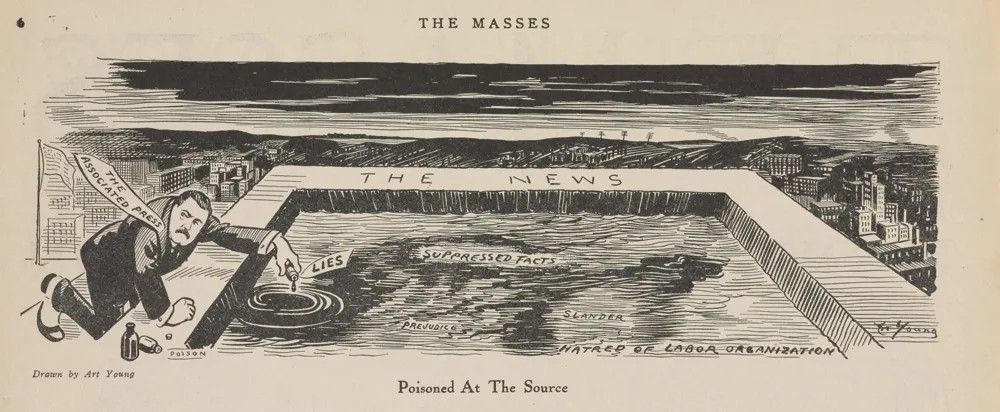
"The news creates a loop of impotence: opinions you can do nothing with, about things you can do nothing about." — Neil Postman
Many people come to Blackout overwhelmed by the news cycle.
Endless stories, endless problems, few (if any) solutions.
This is no recipe for well-being.
But what if we are worse off with more information, not better?
The Agency Test
Blackout challenges us to digest information more deeply across our lives.
As you prepare to re-enter, here's a framework that's served me well:
Can I change this?
- Yes → Act
- No → Why torture myself?
There's a belief that our opinions about politics are inherently valuable.
But our world is the people we can touch and the work we can do. Not Washington drama or Twitter battles.
Derek

Blackout ends tonight at midnight.
It's been an honor to spend these 30 days with you.
The Moment of Truth
During our first Blackout, Alex and I set aside the last 24 hours to check what we missed.
We had hundreds of questions to research.
But when the moment came? We couldn't do it.
Not a single question felt worth looking into.
It felt like checking the bus schedule... for a city we didn't live in anymore.
Zero Willpower
I assume I'll have zero impulse control over a long enough timeline.
If there are cookies in the house, I will eat the cookies.
But if there are no cookies in the house, I stop thinking about cookies.
I just need to be strong at the grocery store, not 24/7.
Making it Stick
I've found two things work best to keep myself on track over the long term:
Identity level shift: "I am not a person that distracts myself online."
Digital guardrails: making distraction more difficult than staying focused.
Never starting has been more effective than trying to stop myself mid-binge.
Godspeed
Whatever path you choose, you've built a rare muscle — choosing what's important instead of what feels urgent.
Thank you for sharing your journey with us these past 30 days.
— Derek
That's all. If you want to join for the next cohort, learn more.